Minor Arcana · Wands
Ten of Wands
In One Line
The load is real, but count it: how many of those ten did anyone actually hand you?
What Ten of Wands Names
The Ten of Wands names success at maximum carry — the suit's fire, won fair and square, now held all at once by one set of arms. Nothing on this card went wrong. That is its sting. Every staff in the bundle was earned: the venture that grew, the reputation for handling things, the yes said to each reasonable request one at a time. The overload is made entirely of victories.
The card's real subject is the posture. Carried this way, the bundle does something worse than weigh — it blocks the view. The figure bent around ten staves cannot see the road, the town, or the point of the whole campaign. The original fire is in there somewhere, pressed against his chest with nine administrative staves around it, indistinguishable now from its own overhead.
And it names the quiet arithmetic nobody carrying it wants audited: loads like this are almost never assigned. They are accepted, one staff at a time, by someone whose worth got tangled up with weight.
On This Card
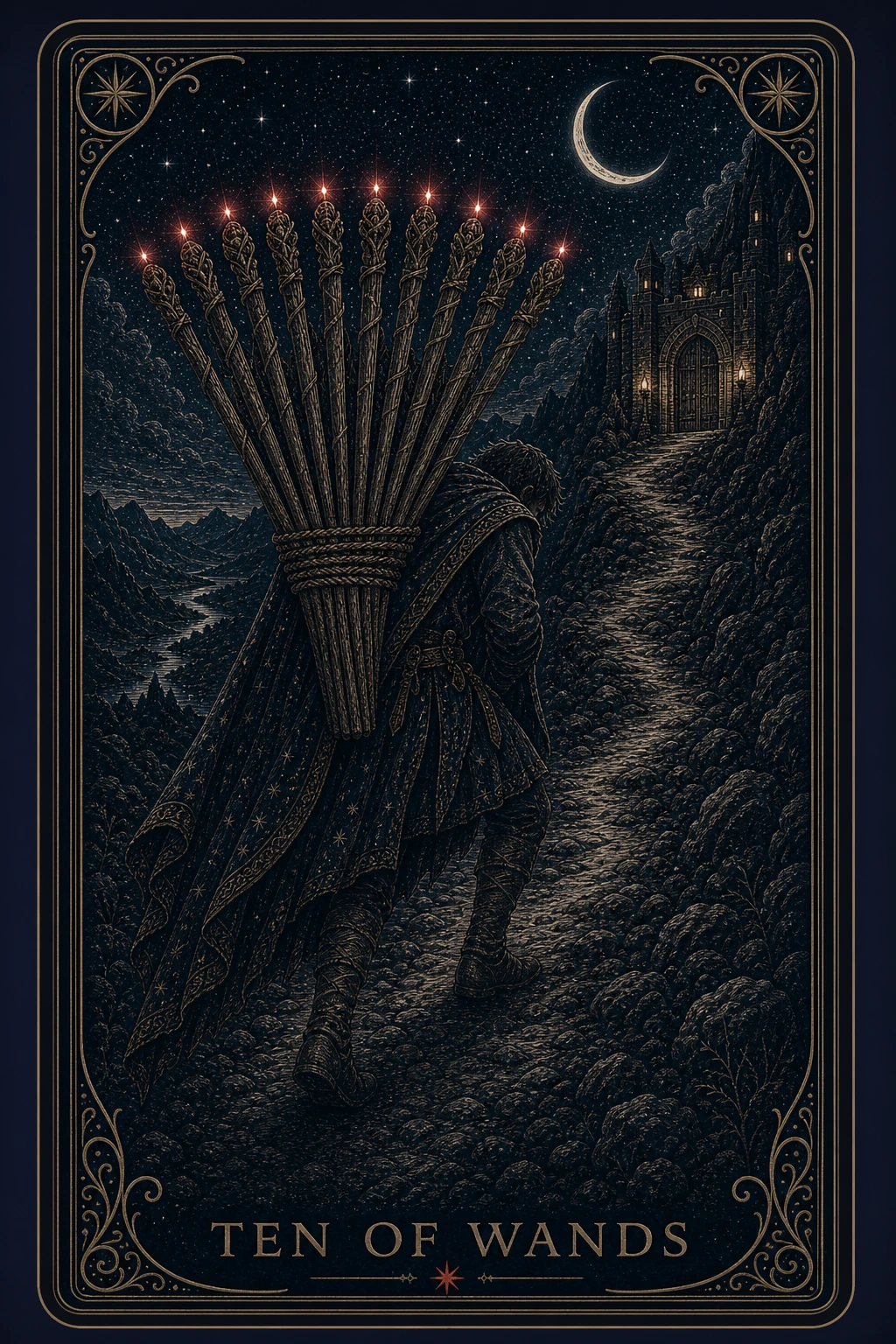
The Night Glass figure carries all ten staves in a single gathered bundle, bent around them, face buried against the wood. The deck's composition is blunt: the fire he spent nine cards earning is now the exact thing between his eyes and the road.
The town is there — lights ahead in the dark, genuinely close. This is the detail the deck insists on. The destination is real and reachable; the carry has an end. The card is not about pointless burden. It is about the last stretch, done in the worst possible posture.
Nothing forces the grip. No rope, no yoke, no figure behind him loading the wood. The bundle holds together because he holds it together — ten staves, one embrace, the suit's final and most expensive act of commitment.
The Inverted Pattern
Running blocked, the Ten becomes martyrdom with a schedule: the overload maintained because put-together is the brand, help refused in advance by never mentioning the weight, exhaustion worn as quiet proof of worth. The staves stop being cargo and become credentials. The inverted question: if you set down three of the ten tomorrow — which three, and what are you afraid the empty arms would say about you?
When It Finds You
The Ten of Wands tends to appear at the far end of a successful season, when the wins have compounded into a schedule with no floor. It appears when delegation is technically possible and somehow never happens. And it appears close to a real finish line, as triage: the town is right there. Carry what's essential through the gate. The rest was never yours to bundle.
The Lineage
The bent carrier closes the suit's number cards in deck after deck, century after century — the oppressed load, the fire become freight. The early painters put the town close on purpose, and readers have understood the joke's mercy ever since: the burden is real, and so is the gate, and the distance between them is short.
The Signal Door
What it names in you is different.
This is what Ten of Wands means in general. What it names in you is a different question.
The Signal reads one card for you — your name, where you actually are, and a pattern named with precision. It opens once per person.