Minor Arcana · Swords
Nine of Swords
In One Line
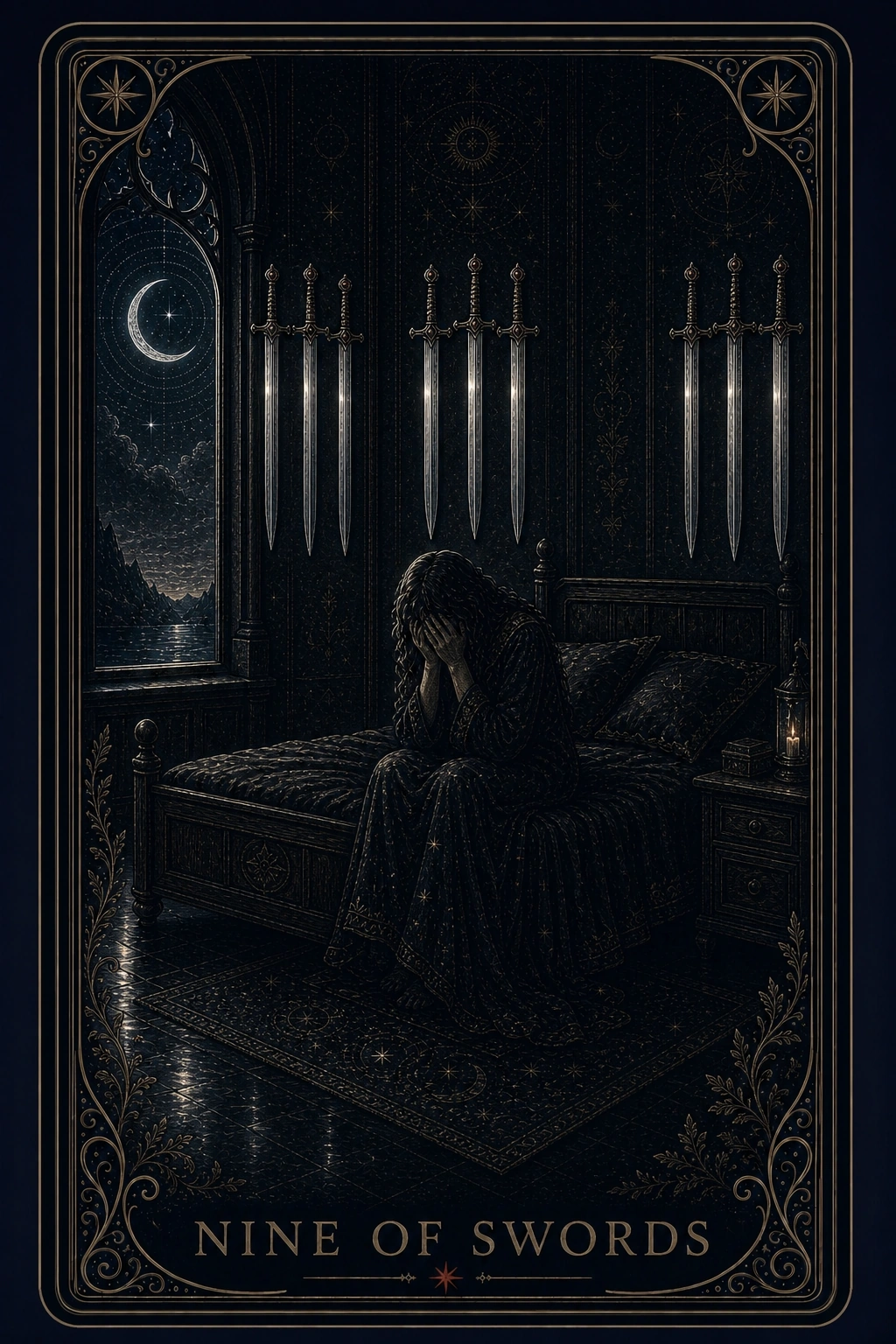
Every sword on that wall is hanging point-down and touching nothing. That's what 3 AM does: it hangs the blades and hides the mounts.
What Nine of Swords Names
The Nine of Swords names the mind's midnight — the hour the thinking turns on its own host. The waking at 3 AM with the catastrophe fully staged: the replayed conversation, the rehearsed disaster, the inventory of everything that could collapse, conducted by the one committee member who never sleeps. It is the suit's most compassionate card, because it draws the suffering exactly as real and the dangers exactly as staged.
Its central distinction is between pain and production. Something real usually started this — a true worry, an actual grief. But the 3 AM mind is a manufacturer: it takes the one real sword and hangs eight replicas beside it, each identical in the dark, and then hides the difference. The Nine's work is the morning audit: which of the nine can act on you today, by daylight, in fact? The count is almost never nine. It is usually one, and sometimes zero.
And it knows the shame layer — the conviction that suffering this privately, this repetitively, is itself a failure. The card overrules that. Every century has painted this bed because every century has sat up in it.
On This Card
The Night Glass swords hang on the wall, points down, in three tidy rows of three — mounted. That is the deck's entire diagnosis, delivered in hardware: not one blade is falling, not one is held, not one touches the figure. They are arranged, the way the night arranges its threats — symmetrical, overhanging, and fixed to mounts the darkness carefully hides. Terrors at this hour come in matched sets. Real dangers almost never do.
The figure sits up on the bed's edge, face in both hands — not lying in the fear, meeting it upright, which the deck counts as the posture already halfway to morning. And on the nightstand, the lantern burns: a small kept flame, within reach the whole time, unnoticed by the hands over the eyes.
Through the window, the crescent moon over quiet water — the night outside the room, going about its ordinary business, entirely unaware of the tribunal indoors.
The Inverted Pattern
At full strength, the Nine annexes the days: the 3 AM committee gets daytime hours, the staged blades get budgets and conversations arranged around them, exhaustion makes the staging ever harder to audit — the mind's theater running matinees. The inverted question: of tonight's nine, which one sword is real — and what is the single daylight action it actually asks of you?
When It Finds You
The Nine of Swords tends to appear in the season of bad nights — when you'd rather not say how long you've been awake or what plays there. It appears when one real worry has been allowed to multiply unaudited. And it appears carrying the lantern's message: light within reach, morning on schedule, and the count, by day, is almost always one.
The Lineage
The sleeper upright in the haunted bed is among the deck's most human constants — painted in every century by people whose 3 AM held plagues, sieges, and debts, and who still drew the swords on the wall, not in the sleeper. The oldest decks already knew the difference between what hangs over a bed and what falls on one.
The Signal Door
What it names in you is different.
This is what Nine of Swords means in general. What it names in you is a different question.
The Signal reads one card for you — your name, where you actually are, and a pattern named with precision. It opens once per person.