Minor Arcana · Swords
Ten of Swords
In One Line
Look where the deck put the swords: in the ground, not in you. It's over — and over is the beginning of the light on that horizon.
What Ten of Swords Names
The Ten of Swords names the bottom — the ending with nothing left to subtract. The project past saving, the relationship past reviving, the version of the story past defending. Tens complete their suits, and this is thought's completion: the mind has run its full campaign, every blade has been spent, and the outcome is total. The card's first mercy is certainty. Whatever this was, it is not partially over.
Its second mercy is the horizon. The Ten of Swords is the only card in this suit with dawn in it — because bottoms have a property no other point on the descent has: they end the falling. From here, the one direction that has stopped being available is down. The card marks the worst morning and, in the same image, certifies it as the last of its kind.
And it retires the mind's final trick — the hope of partial survival for the finished thing. Ten swords, not nine. The completeness is the kindness. Griefs this total can actually be grieved, because nothing ambiguous is left to guard.
On This Card
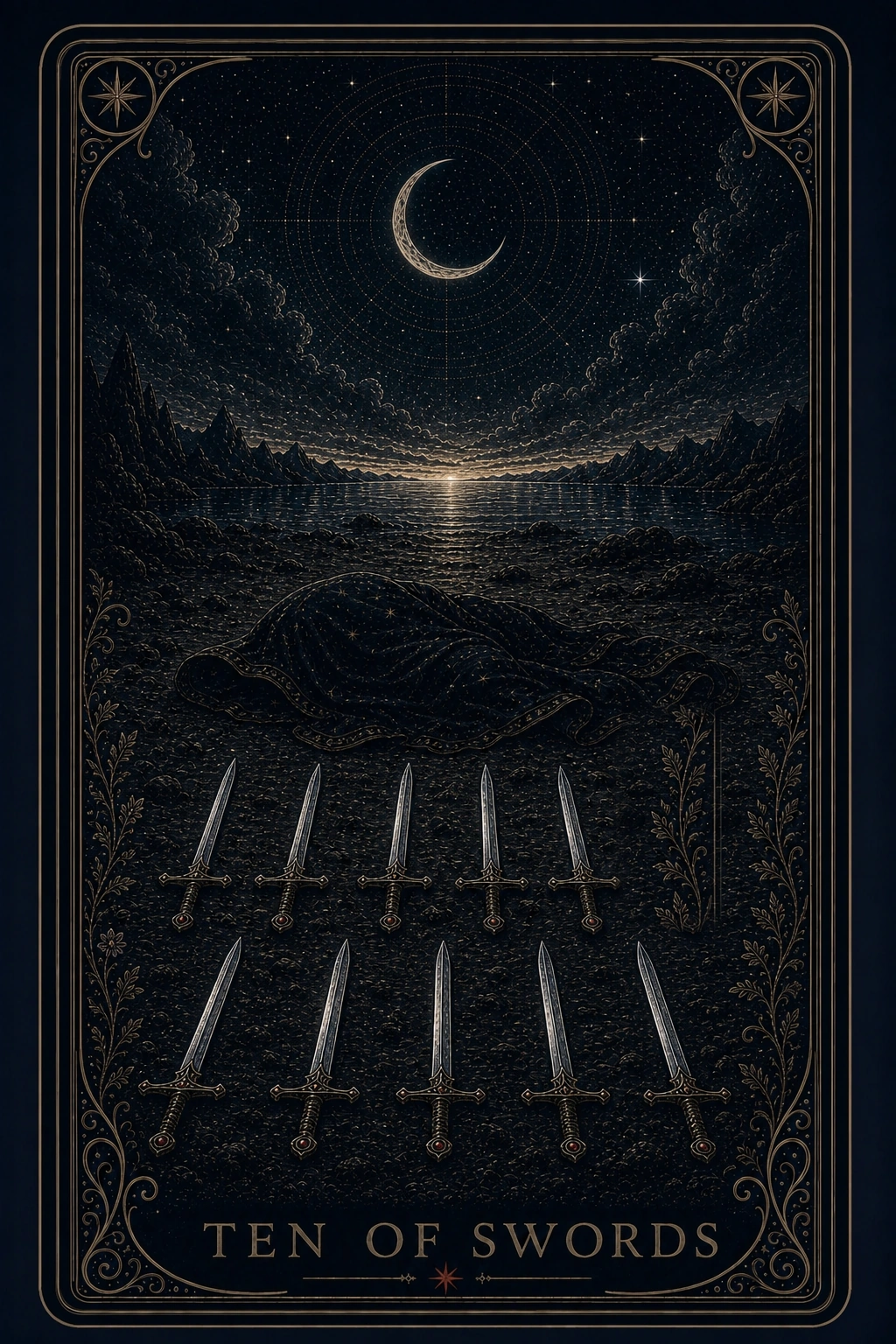
The Night Glass made its gentlest revision here, on the suit's harshest card: the ten swords stand planted in the earth — before the shrouded figure, between it and the viewer, in two even rows. Not one blade touches the body. The deck grants the ending its full count and refuses the cruelty: what happened here is finished, marked, and witnessed — a fence of conclusions, driven into ground that can hold them now, because they are done being carried.
The figure lies beneath an embroidered shroud worked with stars — covered, formally, the way things that mattered are covered. The deck buries nothing in this suit anonymously. Even the endings get the good cloth.
And behind it all, the horizon burns — a long band of gold across the water, the brightest light anywhere in the suit's fourteen cards, rising directly beyond the shrouded form. The deck's geometry is exact: from where the viewer stands, the dawn comes up out of the ending itself. There was no other place on the card it could rise from.
The Inverted Pattern
At full strength, the Ten's block is the refusal of the count: nine-sword thinking at a ten-sword site — revival plans for the finished thing, one more push, one more conversation, the shroud lifted daily to check for breathing. The bottom declined is just the fall extended. The inverted question: what in your life has actually reached ten — and what would you be free to grieve, and then begin, the day you let the count be the count?
When It Finds You
The Ten of Swords tends to appear at the confirmed end — the door that is not reopening, the verdict in. It appears when you already know and are still negotiating. And it appears with its specific, strange comfort: this is the floor. Stand on it. The light on this card comes from exactly one direction, and you are finally facing it.
The Lineage
The fallen figure of the ten blades has closed this suit since the early decks — painted by centuries acquainted with total endings, who still, deck after deck, put the dawn on the horizon line behind him. The pairing is original and deliberate: the oldest painters refused to draw the bottom without also drawing the morning it borders.
The Signal Door
What it names in you is different.
This is what Ten of Swords means in general. What it names in you is a different question.
The Signal reads one card for you — your name, where you actually are, and a pattern named with precision. It opens once per person.