Minor Arcana · Pentacles
Ten of Pentacles
In One Line
The elder built it, the couple runs it, the child will inherit it, and the dog just lives here. Wealth that reached all four of them is the only kind this card counts.
What Ten of Pentacles Names
The Ten of Pentacles names legacy — the suit's completion, where wealth finishes becoming what it was always for. Not the pile but the estate: material life so established it holds three generations at once and has attention left over for a dog. The coin of the Ace, tended through nine cards of work, winter, craft, and patience, arrives here as the thing coins cannot buy directly — a structure people live inside of, together.
What the card measures is reach across time. Every other card in the suit transacts in the present; the Ten transacts in decades. Its wealth is proven not by amount but by transmission — the elder's work standing long enough for a child he may not see grown to stand inside it. Legacy, the card says, is material love with a long enough timeline.
And it keeps the honest tension of every estate: structures that hold generations also bind them. The arch shelters and encloses with the same stones. The Ten at its best is inheritance as gift; the card leaves room, deliberately, for the version where it arrives as script.
On This Card
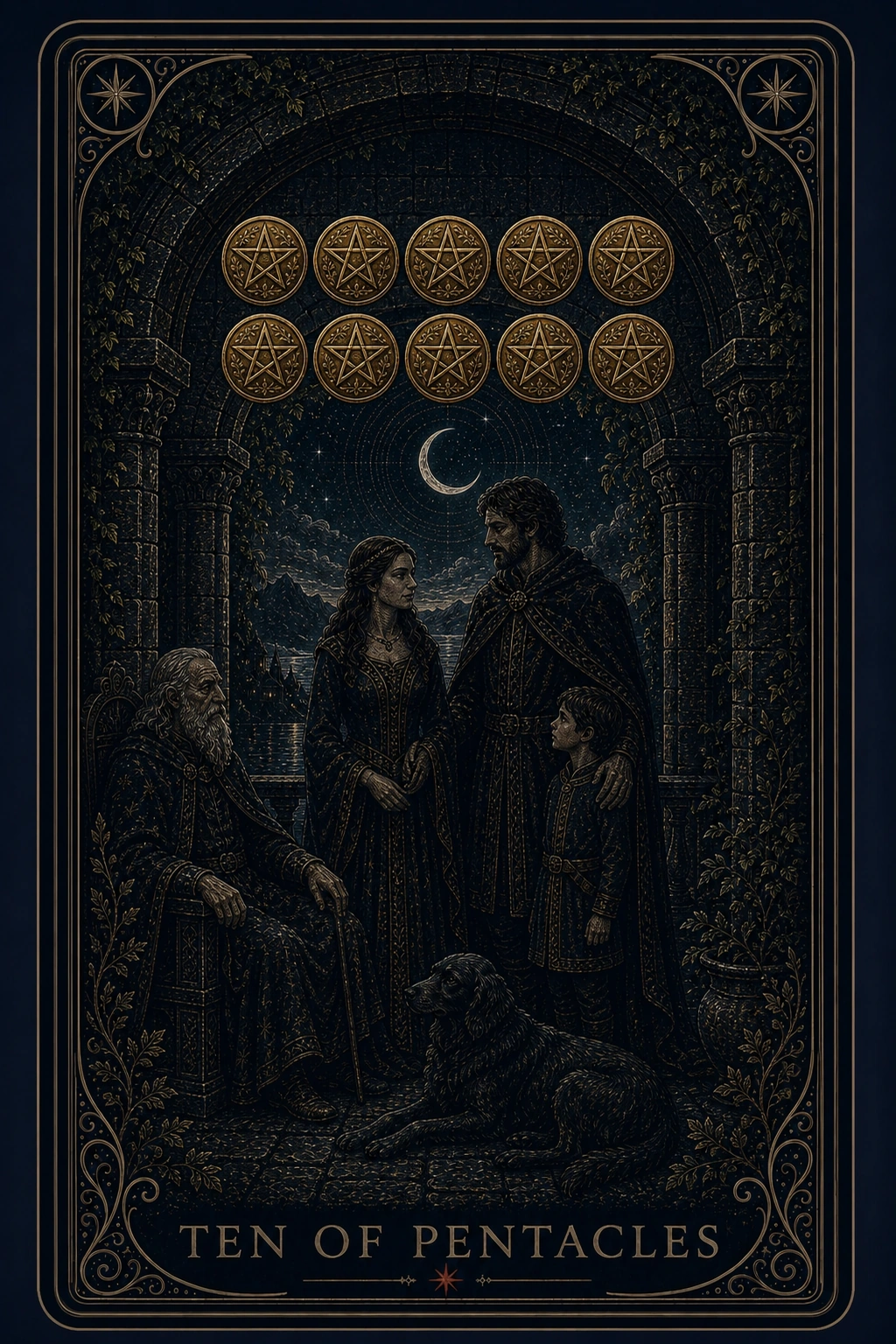
The Night Glass arch holds the whole scene — ivied stone, generations deep in its shadow, the ten coins set across its crown like keystones. The deck built the wealth into architecture one final time: by the suit's end, the coins have left every hand on the card. Nobody holds one. Nobody looks at one. They are up in the masonry, doing what completed wealth does — holding the roof over people who've stopped needing to think about it.
The four figures span the whole human timeline: the elder seated with his cane, watching; the couple mid-conversation, running the present; the child at the father's side, all future. The deck drew the wealth's true ledger in their postures — everyone at ease, no one on guard, inside walls that someone else's decades paid for.
And at the center of it all, the dog — lying down, the deck's second dog, and its placement is the verdict. The Ten of Cups seated its dog in the circle; the Ten of Pentacles lays this one in the doorway of the whole estate. Every structure gets tested by its softest member. A house where the dog sleeps this soundly, front and center, has passed.
The Inverted Pattern
Running blocked, the Ten becomes the estate as cage: the family fortune with terms, the inheritance that arrives welded to a script — who to be, what to run, whom to marry — or the elder's grip refusing the transfer, legacy hoarded to the deathbed, structure without transmission. The inverted question: what are you actually passing down — the resource, or the rules that came riveted to it — and would the child at the arch be free to say no?
When It Finds You
The Ten of Pentacles tends to appear when the long structure is working — the family holding, the business outliving its founder's hands, the ordinary evening under the arch. It appears at inheritance moments, both directions: receive it clean, or transmit it clean. And it appears to builders mid-build as the horizon line: this is what the ninth night at the bench was for.
The Lineage
The three generations at the family gate, coins in the architecture, dogs underfoot — the image closed this suit in the first decks and the painters knew it intimately: the Renaissance casa was the whole social order, the family compound its own small state. They painted wealth's final form the only honest way — as a building full of relatives, standing after its maker sits down.
The Signal Door
What it names in you is different.
This is what Ten of Pentacles means in general. What it names in you is a different question.
The Signal reads one card for you — your name, where you actually are, and a pattern named with precision. It opens once per person.