Minor Arcana · Swords
Ace of Swords
In One Line
The clear thought has arrived. It will cost you the comfortable version of the story — that's how you know it's the real one.
What Ace of Swords Names
The Ace of Swords names the arrival of clarity — the sentence that cuts through a season of fog in one stroke. The realization that reorganizes everything it touches: this is what's actually happening, this is what I actually think, this is the word for it. Like all Aces it is raw supply, the suit's power before any use has been chosen for it.
What the card knows about clarity is that it is not gentle and was never supposed to be. The blade's gift is division — true from convenient, said from meant, what is from what you'd arranged to believe. A thought this sharp always costs something on arrival, usually a comfortable ambiguity you'd been living in. The Ace certifies the trade: what the cut takes is fog. What it leaves is usable.
And it names the responsibility that lands with the blade. A truth this clean can open a way forward or open a wound, with the same edge, in the same sentence. The sword doesn't choose. The hand does.
On This Card
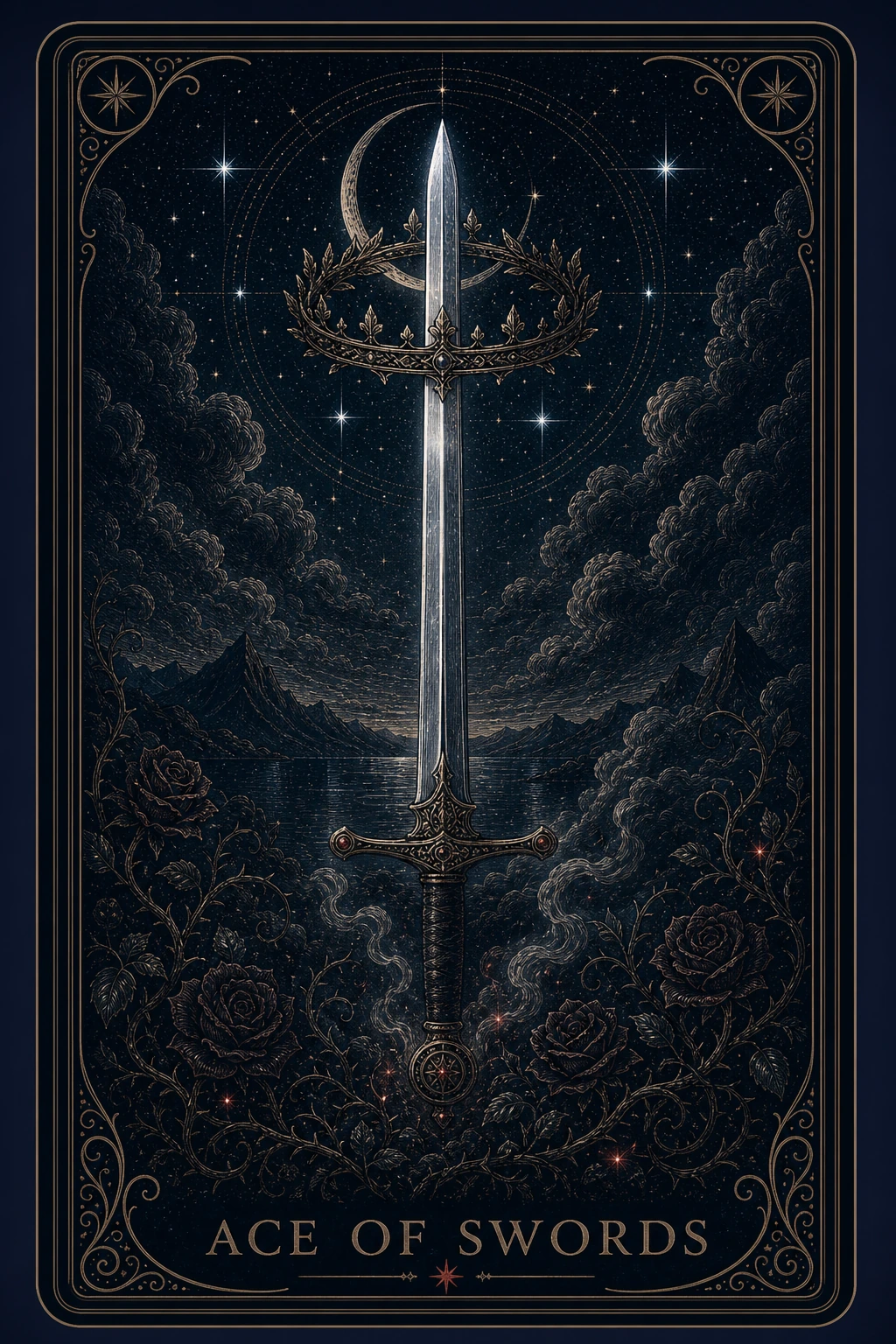
The Night Glass blade rises out of thorns. At its base, dark roses wind around the grip in a bramble — the deck rooting the suit's whole story in one image: clarity grows up through difficulty, and the stems that produce it have thorns the entire way up. No one reaches this sword without reaching through that.
Around the upper blade floats the leafed crown — the old sign of thought completed, achievement of the mind — and the deck leaves it suspended, encircling steel that has already risen past it. The crown isn't the prize here. It's a ring the blade outgrew: real clarity keeps going after the point where it could have stopped to be admired.
And the point itself rises to touch the crescent moon's ring of light. Mind meeting mystery, drawn as contact — the sword at full extension reaches the very edge of what the night knows, and stops exactly there. Even the deck's sharpest instrument ends at the border of the unknowable, and the card draws the border with respect.
The Inverted Pattern
Running blocked, the Ace becomes the undrawn blade: the clear thought arrived, received, and placed in storage — the sentence you know to be true and have never once said aloud, kept sheathed because using it would divide something you're not ready to divide. Clarity postponed doesn't dull. It waits, and it charges rent. The inverted question: what did you become certain of this year — and who hasn't heard it yet?
When It Finds You
The Ace of Swords tends to appear just after the fog breaks — the diagnosis named, the pattern finally worded, the decision suddenly obvious. It appears before a conversation that will require one clean sentence and the nerve to say it whole. And it appears in seasons of comfortable vagueness, as a forecast: the clear version is coming. Decide now whether you'll pick it up.
The Lineage
The suit sign was the spada — the blade of the Italian courts that first painted these decks, the nobility's emblem of judgment and word-keeping. The Ace came early to its pose: one sword, one crown, held up out of the dark by nothing visible. Six centuries of readers have met the same offer — the mind's power, hilt-first.
The Signal Door
What it names in you is different.
This is what Ace of Swords means in general. What it names in you is a different question.
The Signal reads one card for you — your name, where you actually are, and a pattern named with precision. It opens once per person.