Minor Arcana · Swords
Two of Swords
In One Line
The blindfold is doing exactly what you asked it to do. That's the problem.
What Two of Swords Names
The Two of Swords names the constructed stalemate — the decision held at bay by careful, effortful, ongoing balance. Two options, two truths, two loyalties: rather than let them meet, the mind crosses them like blades and holds the cross. From outside it reads as indecision. From inside it is work — the daily labor of keeping two things apart that are trying to resolve.
The card's honesty is about the blindfold: it is worn, not imposed. Nobody on this card tied it. The not-looking is a choice renewed each morning, because looking would end the tie, and ending the tie means one of the two held things loses. The Two of Swords is the card of preferring the ache of balance to the grief of resolution.
And it prices the posture. Arms crossed over the chest, holding steel — the position costs exactly as much energy as it looks like it costs, and it pays out nothing. Stalemates don't ripen. They just hold.
On This Card
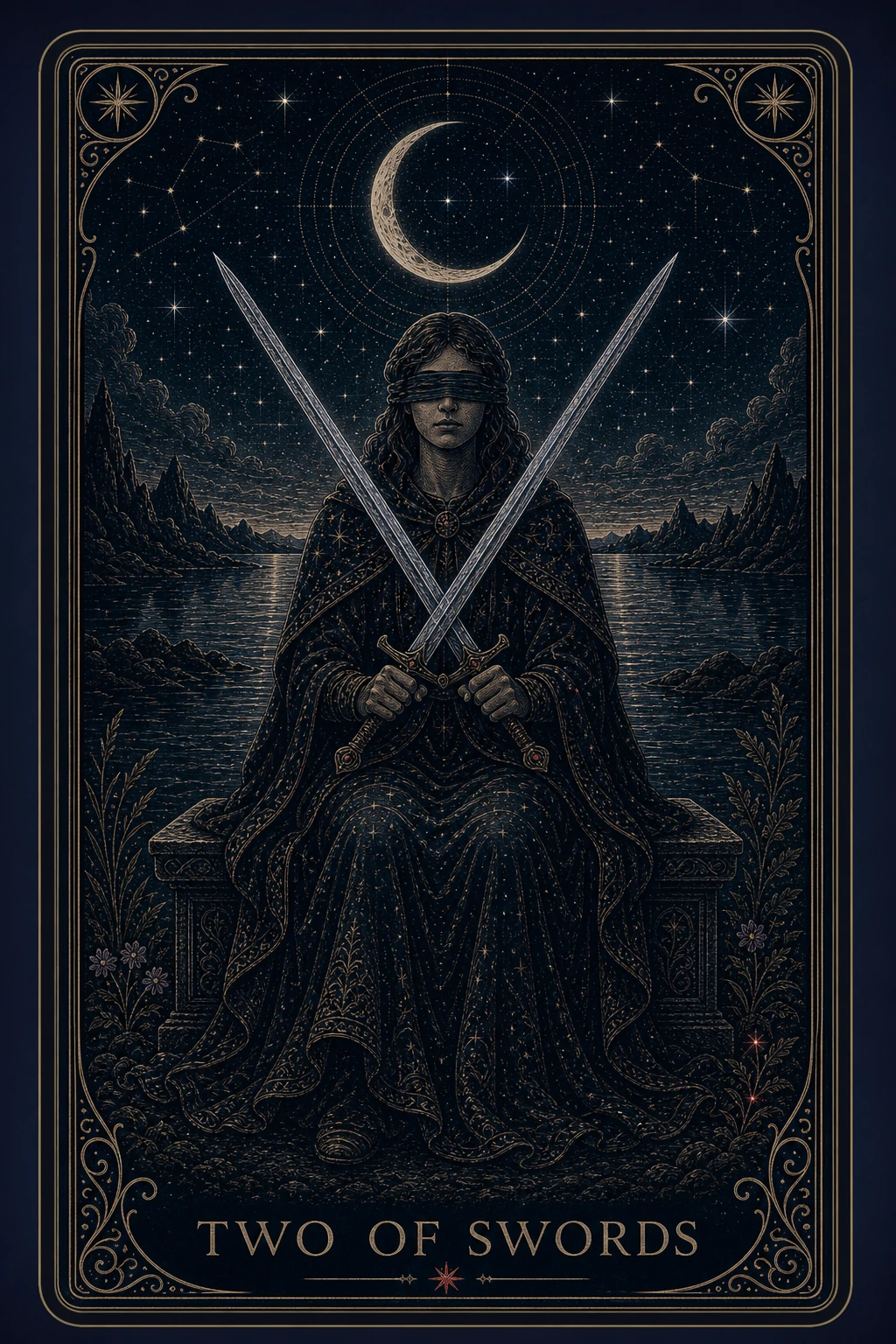
The Night Glass blades cross directly over the heart. Not raised over the shoulders as guard — crossed at the chest, an X of steel between the world and the one organ that could break this tie in a second. The deck's diagnosis is anatomical: this stalemate isn't a thinking problem. It is a feeling being kept out of the ruling.
Behind her, the water lies utterly calm, a soft glow on the horizon of a sky she has chosen not to see. The card surrounds the crisis with peace on purpose — the conditions for deciding are fine. They have been fine for a while. The weather was never what the blindfold was about.
And she sits well. Composed, straight-backed, mouth level — this is the deck's portrait of how sustainable a stalemate can look, which is exactly how they last for years. The strain never reaches the face. It goes somewhere else.
The Inverted Pattern
Running blocked, the Two hardens into policy: the undecided thing institutionalized — questions about it deflected with the same three sentences, the blindfold upgraded to a worldview ("I'm just not a decisive person"), both held options quietly rotting from non-use. The inverted question: if the blindfold came off for sixty seconds, which way do you already know you'd look — and who loses when you do?
When It Finds You
The Two of Swords tends to appear mid-stalemate — the choice you've balanced so long that people have stopped asking. It appears when new information threatens a carefully maintained tie and the temptation is to not read it. And it appears as a cost report: count the months spent holding the cross. The deciding would have hurt once. The holding hurts on schedule.
The Lineage
The blindfolded figure between two blades has held her seat since the early decks — painted by centuries that used the blindfold in their courts of law, where it meant impartiality. The card borrowed the image and asked its darker question: impartial between whom? Some verdicts are owed. Six hundred years of readers have known she'll have to look.
The Signal Door
What it names in you is different.
This is what Two of Swords means in general. What it names in you is a different question.
The Signal reads one card for you — your name, where you actually are, and a pattern named with precision. It opens once per person.