Minor Arcana · Cups
Five of Cups
In One Line
Three spilled. Two standing — and the deck put them on the bridge, because what remains is how you cross.
What Five of Cups Names
The Five of Cups names grief in its proper posture — head bowed, cloak drawn, attention fully on what spilled. And its first ruling is that this posture is correct. Feeling that poured out deserves to be mourned at the site; the figure who skips this card's vigil just carries it forward unattended. Nothing in the Night Glass rushes the mourner.
What the card holds, patiently, until the mourner can receive it, is the arithmetic: five cups were carried into this scene, and three went down. The remainder is not a consolation prize — it is a third part of the truth, standing quietly behind the grief, and it becomes visible at exactly the speed the griever becomes able to turn.
The card never says the spilled cups didn't matter. It says the count is five, not three — and that at some point, staying bent over the three becomes its own way of spilling the two.
On This Card
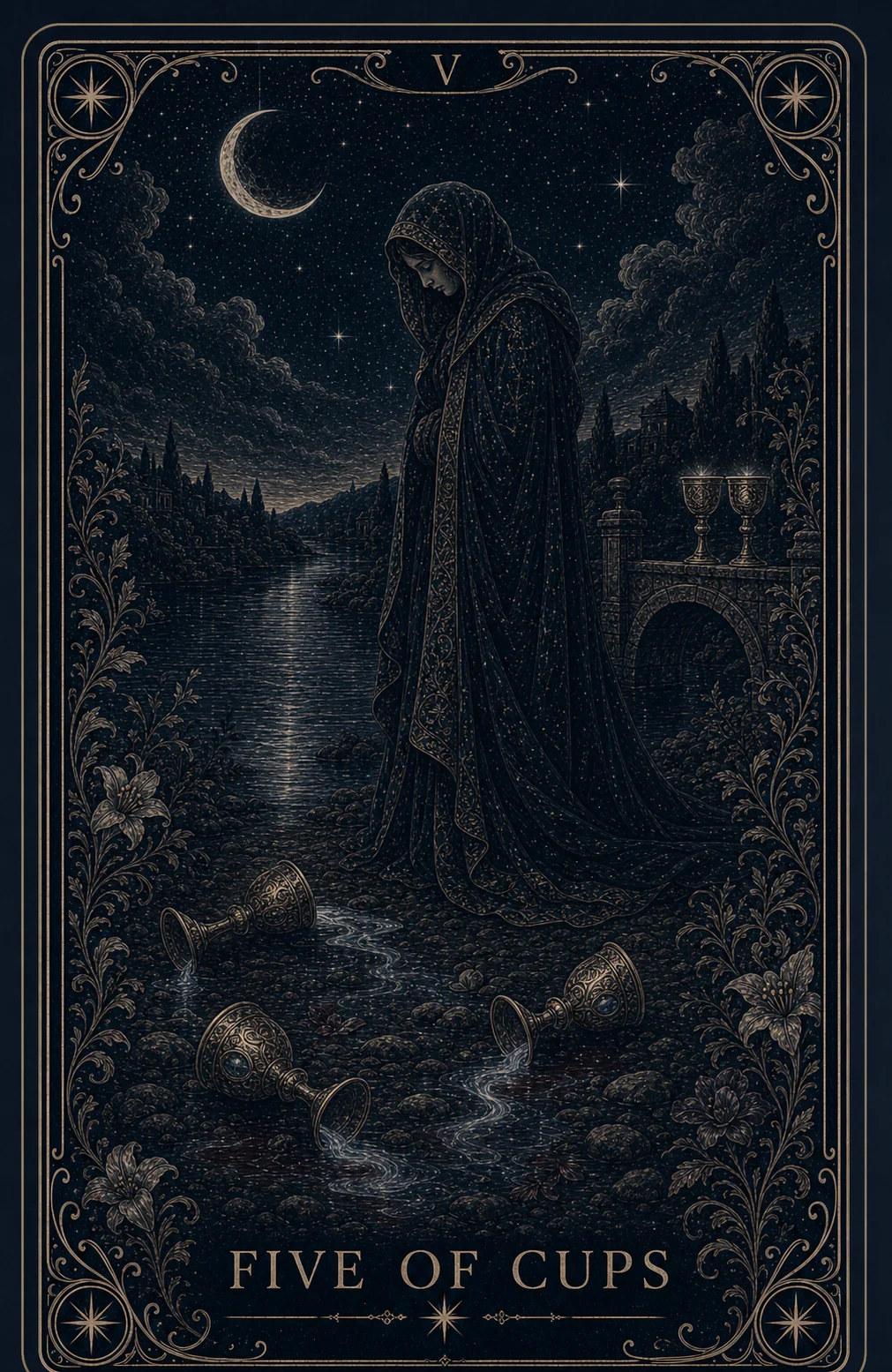
The spilled cups lie in the dark foreground, and their contents are still moving — silver rivulets running off through the stones, the loss drawn as something with direction, on its way to the river that takes everything spilled. Grief in this deck flows. It does not pool forever where it fell.
And then the Night Glass makes its boldest placement in the suit: the two remaining cups are not behind the mourner's back on the same ground. They stand on the parapet of the bridge — upright, glowing, positioned at the crossing itself. What survived the loss has been set at the exact point where this landscape is crossable. The deck's claim is quiet and structural: the remainder is not what's left over from your old life. It is the toll paid forward into the next one.
Beyond the bridge, the river runs toward a distant lit town. The far side is inhabited. The figure hasn't looked yet. The card waits.
The Inverted Pattern
Running blocked, the Five becomes residence at the spill site: the loss revisited daily until the visiting is the life, identity rebuilt around the three cups because the two on the bridge would require crossing — and crossing would mean the grieving chapter ends, and the grieving chapter has become the last place the lost thing still lives. The inverted question: what are you keeping alive by staying bent over it — and what would it mean about you if you stood up?
When It Finds You
The Five of Cups tends to appear mid-mourning, as permission: the bowed head is right, take the time. It appears later in the same grief, as a count: five, not three — when you're ready. And it appears around disappointments that were never formally mourned — the plan, the person, the version of your life that quietly went down — still running their silver threads under everything, unattended.
The Lineage
The mourner among the spilled vessels goes back to the deck's early centuries — the cloaked figure, the overturned cups, the bridge and river placed behind in image after image. The Renaissance painted grief with a built crossing already in the frame. They buried often enough to know the card needed one.
The Signal Door
What it names in you is different.
This is what Five of Cups means in general. What it names in you is a different question.
The Signal reads one card for you — your name, where you actually are, and a pattern named with precision. It opens once per person.