Minor Arcana · Cups
Six of Cups
In One Line
The past keeps offering you flowers. Take the flowers. Just don't move back in.
What Six of Cups Names
The Six of Cups names memory as a living supply — the sweetness that travels forward from the past and still nourishes. The scent that undoes a decade in one breath, the old friend with whom you are instantly nine again, the tenderness toward your own younger self that arrives, sometimes, decades late. This card holds the entire deck's gentlest territory.
Its central image is exchange between innocents: giving before giving had strategy, receiving before receiving had debt. The card appears to remind grown hearts that they once operated this way — and that the capacity wasn't lost, only buried under the accounting that adulthood installed.
And it keeps, honestly, the double edge of its own sweetness. Memory nourishes and memory recruits. The same warmth that feeds the present can staff a museum instead — the golden era curated, revisited, preferred. The Six offers its flowers with the stems toward you. Which way you carry them is the reading.
On This Card
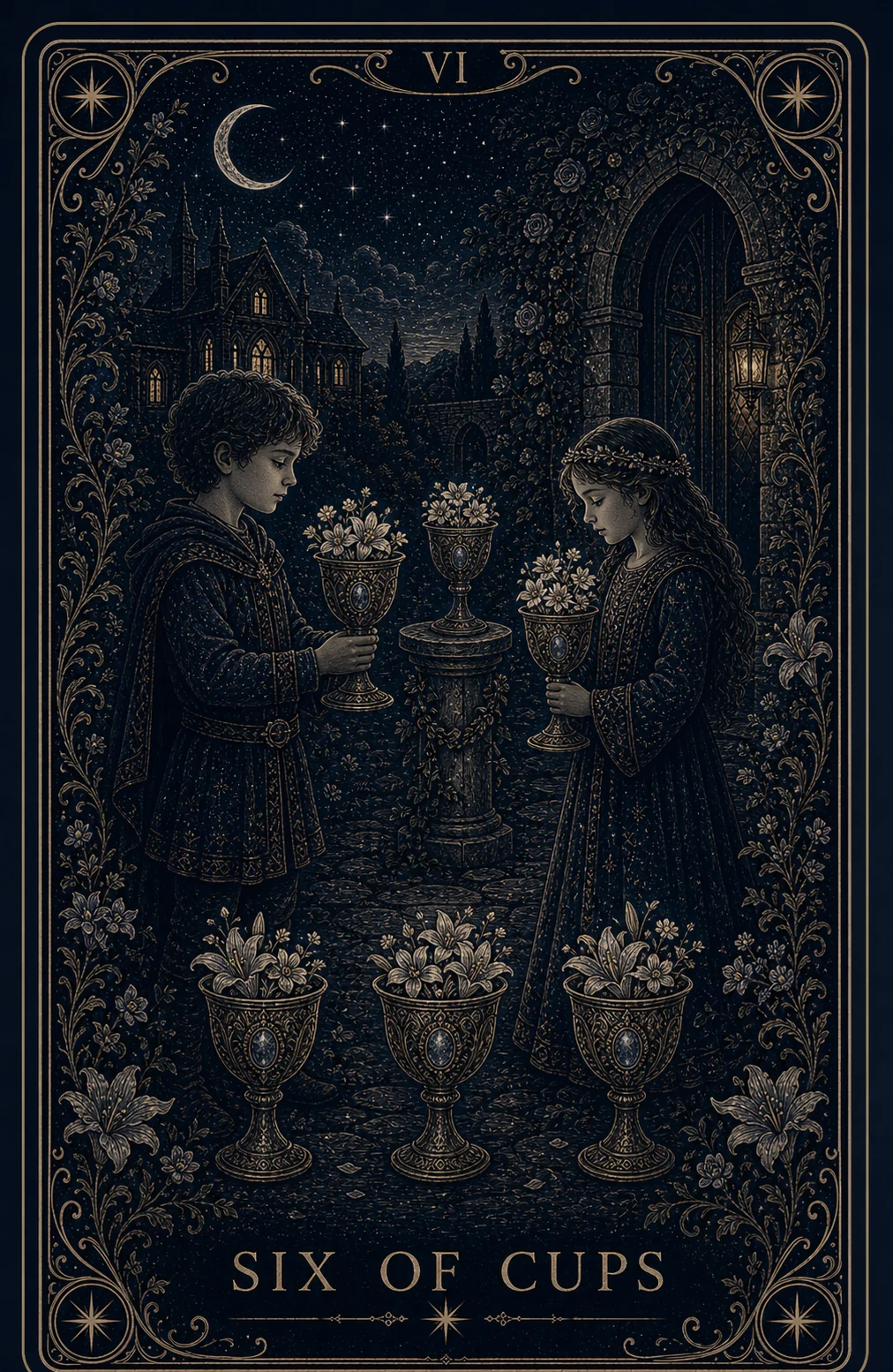
The Night Glass garden is walled — an enclosed courtyard, rose vines on the arch, a lantern lit in the doorway, the manor's windows warm behind. The deck built memory as architecture: a protected interior, entered through an arch, kept by a small steady light. This is what the past is for on this card — a walled garden you can visit, not open country you can live in.
The two children stand at the exchange, both gazes down on the offered cup, the same shared attention the Two of Cups gave the lovers — the deck rhyming its own images on purpose. Every cup in the frame has flowers growing from it. In this suit the cups hold water, wine, visions, grief; only here do they bloom. Feeling, aged long enough in safety, comes up flowers.
And the moon holds its crescent over the scene — even the deck's tenderest card stays inside the night. Sweetness here doesn't require pretending the dark away.
The Inverted Pattern
Running blocked, the Six becomes the museum: the golden era walked daily while the present goes unwatered — old loves re-read, old rooms preserved, the walled garden converted from a visit into an address. Or memory's other blockage: a past too thorny to visit at all, its flowers refused along with its thorns. The inverted question: does your best feeling live in rooms that no longer exist — and what would it take to grow any of it at your current address?
When It Finds You
The Six of Cups tends to appear when the past reaches forward — the reunion, the message from an old name, the season when childhood surfaces asking to be felt rather than analyzed. It appears when your present could use a supply run to the garden: old music, old friends, the version of you that gave freely. And it appears, gently, when nostalgia has started doing the present's job.
The Lineage
Children among flowering cups, a walled town garden behind them — the image settled early and stayed six centuries. Renaissance courtyards were painted exactly this way: enclosed, roses on the arch, a lamp at the door. The old decks understood memory as the walled garden every adult carries — and painted the gate open.
The Signal Door
What it names in you is different.
This is what Six of Cups means in general. What it names in you is a different question.
The Signal reads one card for you — your name, where you actually are, and a pattern named with precision. It opens once per person.