Minor Arcana · Pentacles
Five of Pentacles
In One Line
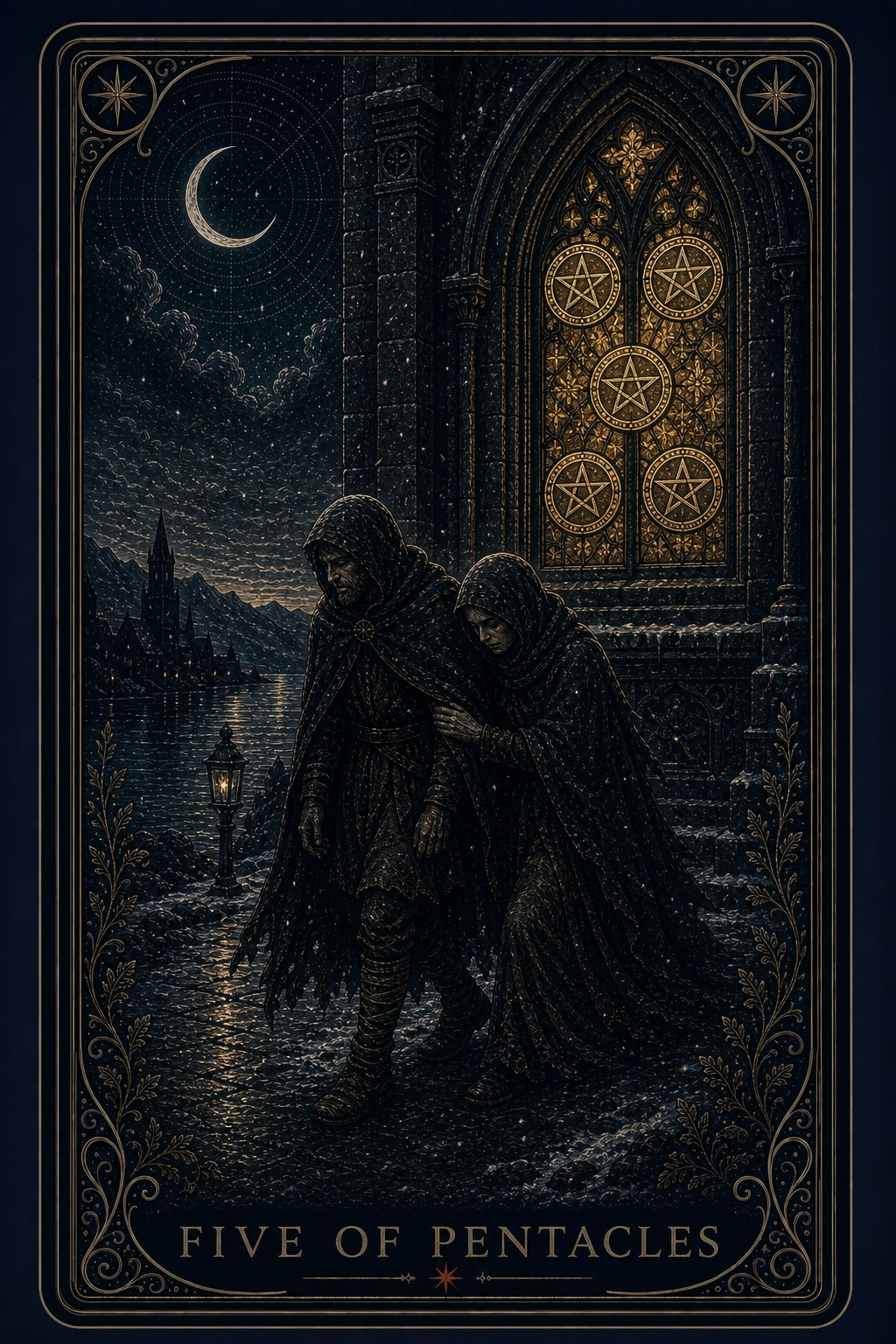
Two people in the snow — and they're holding each other up. The card counts what the winter didn't take.
What Five of Pentacles Names
The Five of Pentacles names the material winter — the season outside the lit window. Money gone, health gone, standing gone, or all three traveling together as they like to do. It is the suit's honest low, and the deck refuses to pretend otherwise: the cold on this card is real cold, the lack is real lack, and nobody inside the glowing window has noticed the two figures passing it.
What the card documents, against the poverty, is the wealth it can't reach: the figures hold each other up. One hand on a shoulder, two people making one walking structure — the card's entire ledger of what winter cannot confiscate. Material seasons strip the material. What remains, visibly, drawn in the same gold line as the window's glow, is the human architecture.
And it asks its hardest question gently: the light is right there. Every Five of Pentacles walk passes some window, some door, some help that pride, shame, or the certainty of unwelcome keeps unentered. The card never says the welcome is guaranteed. It says the walking past is a choice being made inside the weather.
On This Card
The Night Glass window holds the five coins in stained glass — glowing gold, set into the church wall, the brightest object on the card by far. The suit's own emblem, five of them, warm and lit and on the other side of glass. The deck's placement is exact: in a material winter, wealth doesn't vanish from the world. It vanishes from reach, which is a different wound, and the card draws that wound precisely.
The two figures pass close along the wall — hooded, patched, leaning into each other against the snowfall. The deck gave them one detail the tradition often withholds: tenderness. The rear figure's hand rests on the leader's arm. They are steering each other.
And by the water, apart from the great window, the deck added a small thing: a lamppost, lit. A minor light, at street level, unaffiliated with the architecture. The card keeps it burning in the corner like a quiet dissent — not all light in a winter is behind glass.
The Inverted Pattern
At full strength, the Five becomes the permanent weather report: the winter internalized as identity — help unasked because unwelcome is assumed, every lit window pre-read as locked, the season's posture still worn years into the thaw. The inverted question: what door are you currently walking past on the certainty it wouldn't open — and when did you last actually test that certainty with a knock?
When It Finds You
The Five of Pentacles tends to appear inside the hard season — the depleted account, the body's bad year, the stretch where lack compounds. It appears to name the intact thing: whoever is walking it with you, count them. And it appears as a knock prescription: one door, this week, asked at directly. Winters end faster indoors.
The Lineage
The two beggars passing the lit church window have walked through this card since the early decks — painted by centuries that knew famine and plague at street level, by painters who put the sanctuary's warmth and its shut door in the same image without resolving them. The question the card has asked for six hundred years is the one it still asks: whose job is that door — theirs, or yours?
The Signal Door
What it names in you is different.
This is what Five of Pentacles means in general. What it names in you is a different question.
The Signal reads one card for you — your name, where you actually are, and a pattern named with precision. It opens once per person.