Minor Arcana · Wands
Seven of Wands
In One Line
They're contesting the position because the position is worth something. Hold it like you know that.
What Seven of Wands Names
The Seven of Wands names the defense of won ground. It is the sequel every Six eventually gets: the elevated position, now contested. The claims arrive — competitors, critics, doubters, the committee of your own second thoughts — and the card's first service is translation: challenge is what standing somewhere real feels like. Positions nobody contests are positions nobody wants.
Its teaching is about footing. The figure holds high ground, and the card is adamant that he keep the advantage honest: defend from where you stand, not from where the challengers say the fight is. The losing move on this card is always the same one — coming down the hill to answer every raised staff on its own terms, until the defense of the work replaces the work.
And it makes the quiet count: six against one, and the one is holding. Advantage is not numbers. It is knowing exactly what you're standing on and why.
On This Card
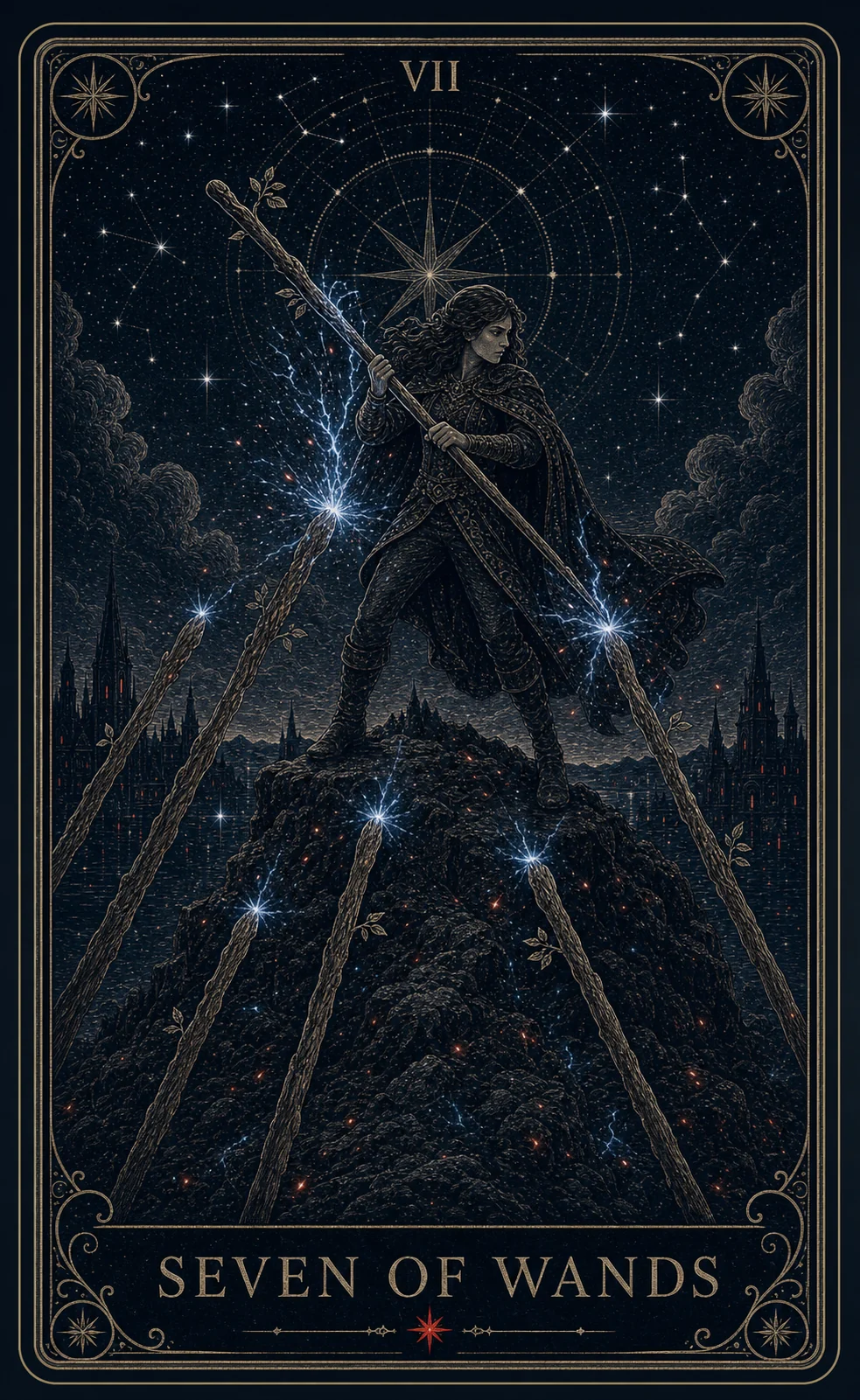
The Night Glass figure holds the high ground and the deck gives him a real edge to hold — the slope drops away sharply, and the six staves rise from below at angles, their holders down in the dark, barely sketched. The challenges are real; the challengers are almost anonymous. That is how this pressure usually arrives: the objection distinct, its source oddly faceless.
His staff is braced crosswise, both hands — a blocking grip, not a striking one. The card's whole ethic in one detail: this is defense, the protection of a position, not the punishment of the people contesting it.
Gold light holds around him at the hilltop while the attackers' staves remain unlit. In this suit, that is a verdict about whose fire this ground actually feeds.
The Inverted Pattern
Running blocked, the Seven becomes defense as identity: everything experienced as a siege, feedback indistinguishable from attack, the crosswise staff never lowered even in empty rooms — or its collapse, the ground conceded at the first raised voice because holding felt arrogant. The inverted question: which challenges deserve your footing — and which ones are you climbing down the hill to answer?
When It Finds You
The Seven of Wands tends to appear when a position starts drawing fire — the raise asked for, the price set, the boundary that others keep testing for negotiability. It appears when success has made you newly contestable and the criticism feels like proof of error rather than proof of stakes. And it appears as a posture check: high ground, both hands, hold.
The Lineage
The valiant one — the defender above the six, painted since the early decks with the same impossible odds and the same steady footing. The centuries read it plainly: one determined position, honestly held, against the many. The card has never promised he wins. It has only ever shown that he hasn't yielded.
The Signal Door
What it names in you is different.
This is what Seven of Wands means in general. What it names in you is a different question.
The Signal reads one card for you — your name, where you actually are, and a pattern named with precision. It opens once per person.