Minor Arcana · Swords
Three of Swords
In One Line
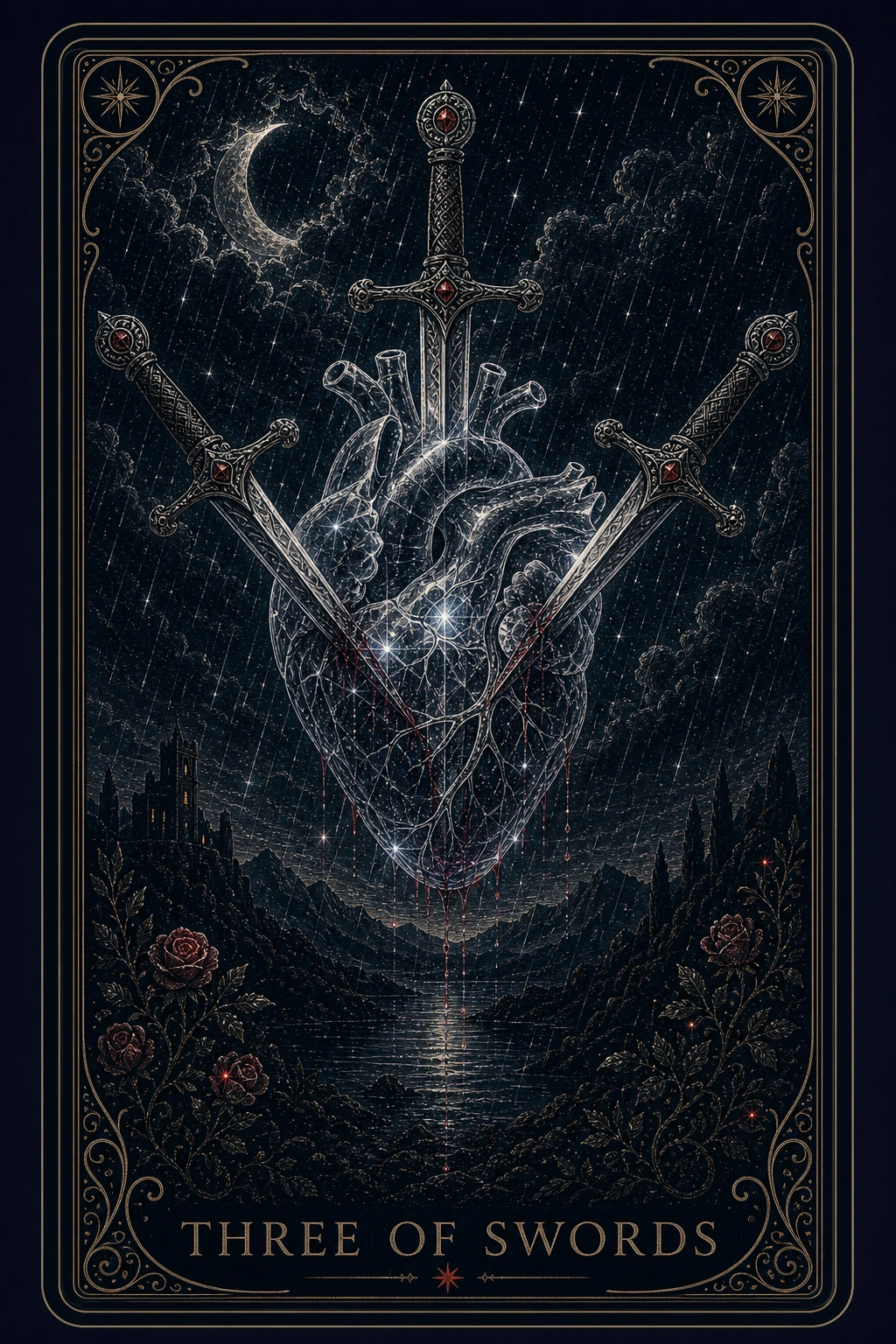
The deck made this heart out of glass on purpose. Pierced — and still transparent, still lit, still whole.
What Three of Swords Names
The Three of Swords names the wound made of truth — heartbreak in its precise form. Not the slow erosion of feeling; the puncture. The sentence that went in clean: the confession, the discovery, the diagnosis, the words that can't be taken back because they were accurate. Three blades, because real heartbreak is rarely one fact — it's the fact, plus what it means about the past, plus what it takes from the future.
What the card refuses, quietly and completely, is the story that piercing equals ruin. Hearts are not walls that fail when breached. The wound of an accurate truth is clean by nature — it is the inaccurate comforts, left in place, that infect. The Three marks the worst hour honestly and then stands there with you, raining, insisting on one distinction: this is pain, not damage.
And it names pain's strange gift of precision. Grief this sharp always knows exactly what it's about. In a suit devoted to clarity, even the wound tells the truth.
On This Card
The Night Glass heart is made of glass. The deck put its own name into its most painful card: the pierced heart drawn transparent, veined in light, a star burning at its center — run through three times and refusing both of the expected failures. It does not shatter. It does not go dark. Pierced glass, still standing, still lit: the whole philosophy of this deck, stated at the exact point of maximum damage.
Because it is glass, it hides nothing. The blades are visible all the way through — entry, passage, point. This heart has no unexamined wound and no secret one. What pierced it can be seen precisely, named precisely, and therefore, eventually, withdrawn precisely.
The rain falls through the whole card, and the heart's red drops fall with it, down into the lake below — grief given somewhere to go. And on the far hill, one window burns in a dark tower: someone else awake in this weather. The card never claims you're the only one it's raining on.
The Inverted Pattern
Running blocked, the Three becomes the sealed wound: the piercing never grieved, the blades left in because removal would mean feeling the passage twice — heartbreak converted to exhibit, referenced often, touched never. Glass that stops admitting light. The inverted question: which old piercing still has the sword in it — and what are you afraid would pour out with the blade?
When It Finds You
The Three of Swords tends to appear at the puncture itself — the week of the discovery, the day of the words. It appears long after, when an old wound signals it's ready for the blade to finally come out. And it appears, sometimes, before: a truth is approaching that will hurt in the clean way, and the card comes ahead of it like weather, so you can decide to be someone who lets accurate things in.
The Lineage
The pierced heart is one of the deck's oldest surviving images — three blades through a single heart, unchanged in essence since the first painted cards. The Renaissance wore the same emblem in its jewelry and its chapels: the heart run through and held up anyway, sorrow as something displayable, survivable, sacred. The card kept the heart raised. It has never once been shown falling.
The Signal Door
What it names in you is different.
This is what Three of Swords means in general. What it names in you is a different question.
The Signal reads one card for you — your name, where you actually are, and a pattern named with precision. It opens once per person.