Major Arcana
XV — The Devil
In One Line
The chain is loose. You keep it on because familiar weight feels safer than unfamiliar freedom.
What The Devil Names
The Devil names the attachment that has been promoted to fate. The pattern so old it feels like personality. The "that's just how I am," the "it's too late now," the arrangement everyone in it quietly hates and no one moves to end. The card's subject is not evil. It is entrapment — specifically, the kind that requires the trapped party's daily cooperation.
Its central revelation is almost insultingly simple: the lock is open. Look at any long-held chain honestly — the substance, the grievance, the role, the relationship pattern — and somewhere in the looking comes the uncomfortable recognition that leaving was technically possible the whole time. Technically. The Devil knows the real binding was never the metal. It was the trade: the chain pays out something — numbness, identity, the comfort of a known cage — and the payment feels like survival.
The card arrives not to shame the trade but to make it visible. Named, it becomes a choice being made rather than a condition being suffered. And choices, unlike conditions, can be unmade.
On This Card
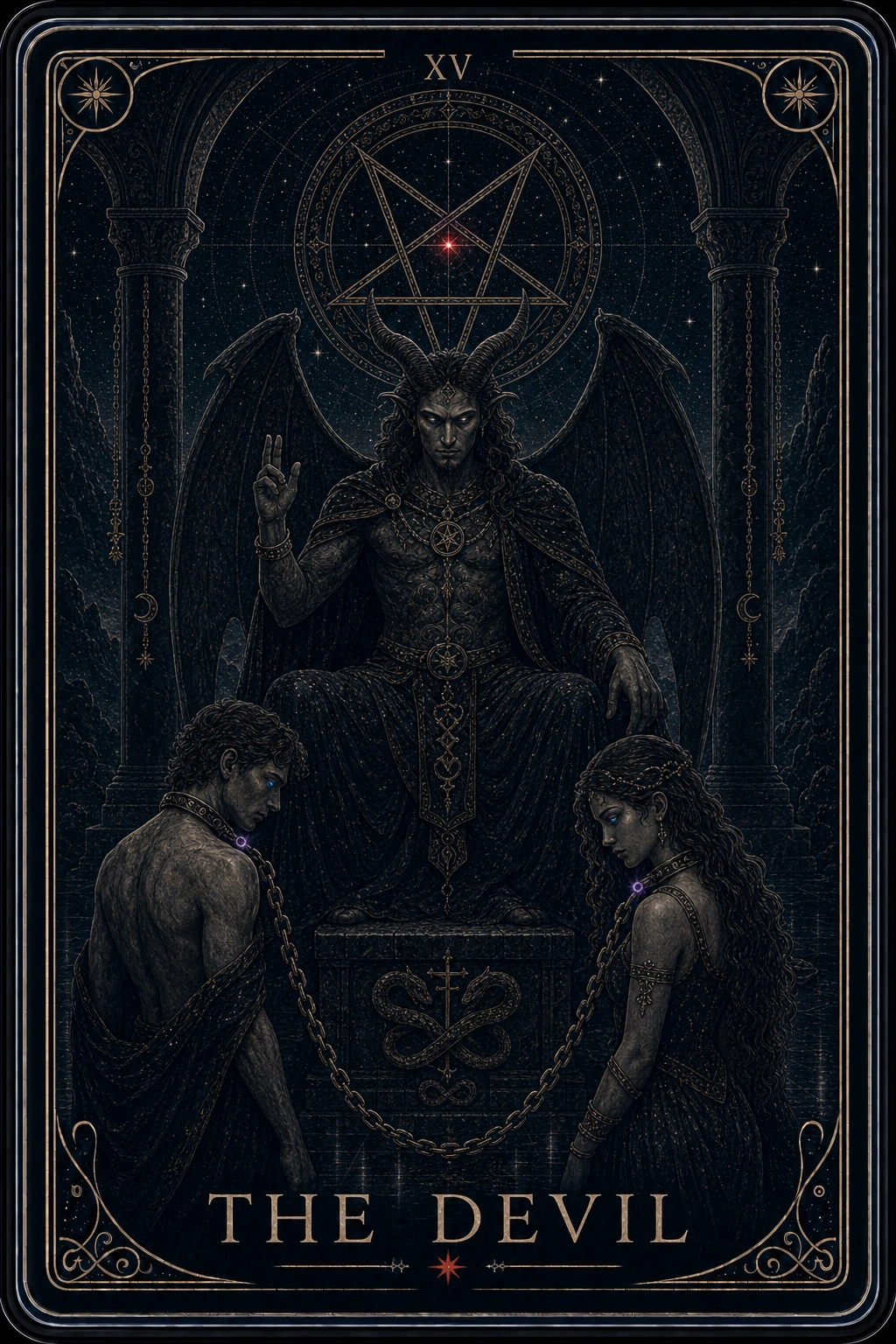
The Night Glass Devil sits above two figures, and the deck has drawn the chain with total precision: it drapes. One chain, slack across the pedestal between their collars, held taut by nothing. Neither figure is pulling against it. That slack is the entire teaching — the restraint is being supplied by the restrained.
Their heads are bowed. Not in pain — in habit. They are not looking at each other, at the figure above them, or at the chain. Captivity's real mechanism on this card is attention: what is never looked at is never questioned.
Above, the inverted pentagram burns with a red star at its heart — the deck's signal color, here marking the false center of gravity everything in the image orbits. And at the chain's clasps, tiny violet glints: the same light the deck spends on truth everywhere else, waiting at exactly the point of release. The way out is lit. It has been the whole time.
The Inverted Pattern
Running at full force, The Devil stops whispering and becomes the open secret: the pattern everyone can see, defended with increasing sophistication by the person inside it. The trade gets renegotiated upward — more numbness for more freedom surrendered. The inverted question is the one the bowed heads avoid: if you looked directly at the thing you organize your days around, what would you have to admit about what it costs — and what it pays?
When It Finds You
The Devil tends to appear around the comforts that have quietly become governors — the habit that schedules you, the resentment that has outlasted its cause and become a hobby. It appears in arrangements maintained because renegotiating them would mean one honest conversation. And it appears when you hear yourself explaining, fluently, why you can't — and some cooler part of you notices how rehearsed the explanation sounds.
The Lineage
Painted through the centuries as the image of bondage entered willingly — the chained pair appearing beneath the horned figure in deck after deck, almost always with the chains drawn slack. Readers have been shown the open lock for six hundred years. Every era recognizes its own chains in it; that is why the card survives.
The Signal Door
What it names in you is different.
This is what The Devil means in general. What it names in you is a different question.
The Signal reads one card for you — your name, where you actually are, and a pattern named with precision. It opens once per person.